RAYAN YASMINEH
Rencontre avec le zéphir
PARIS
SOLO SHOW
01.02.2025-01.03.2025
1. EXHIBITION TEXT
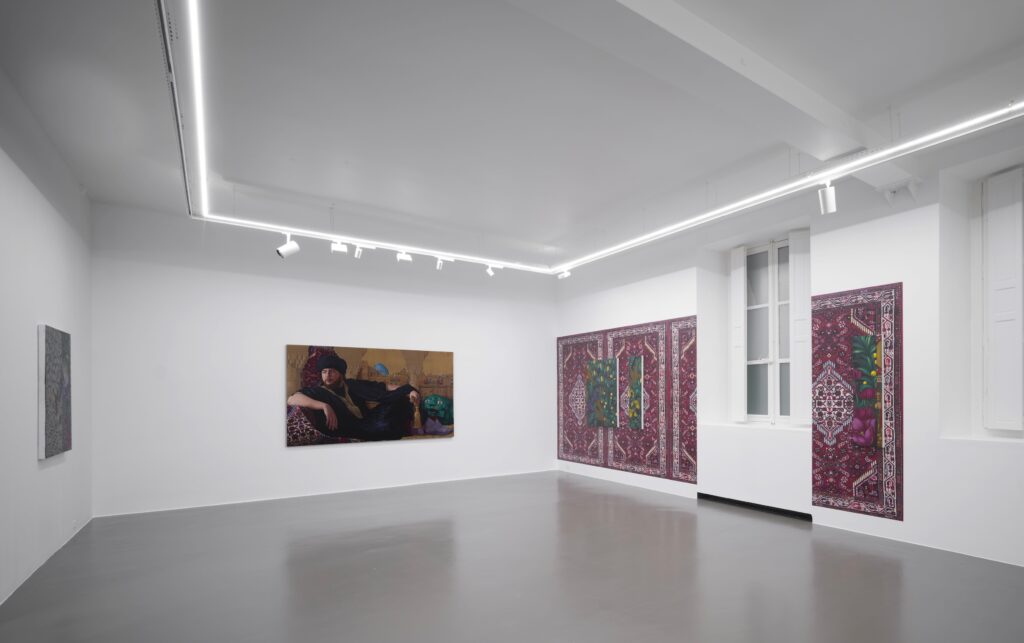
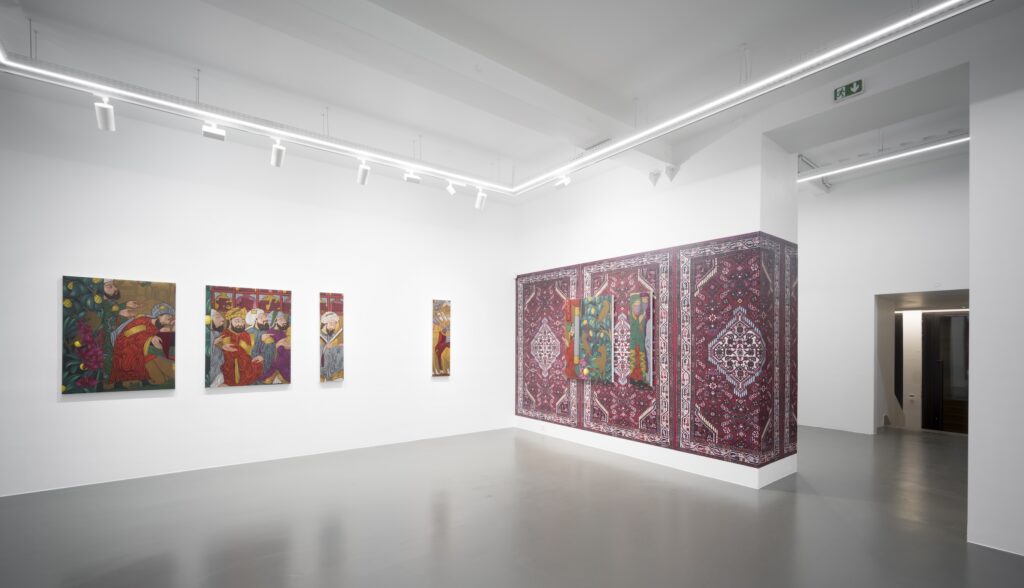
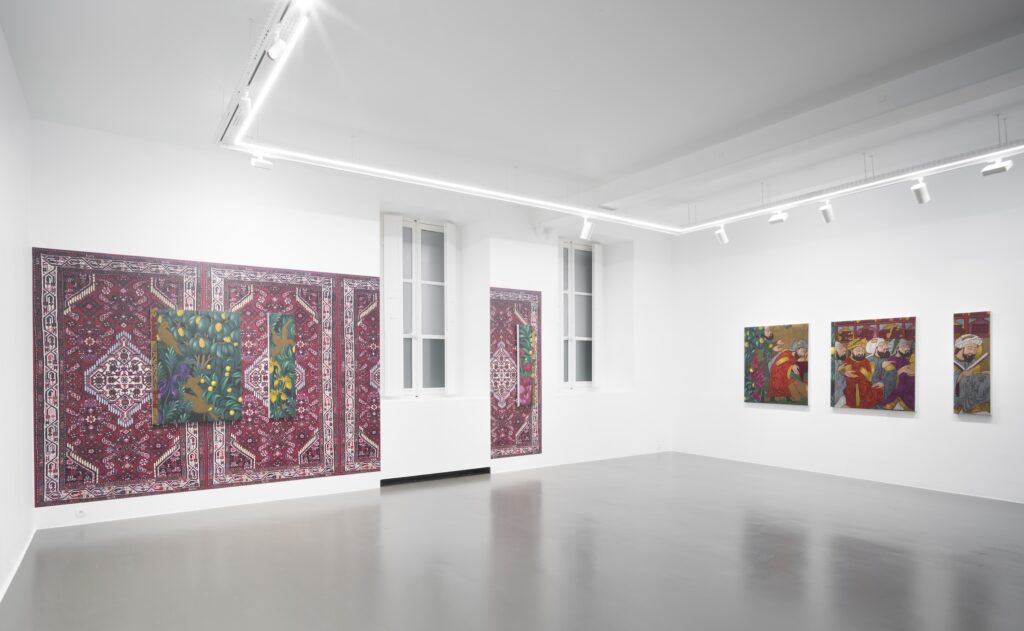
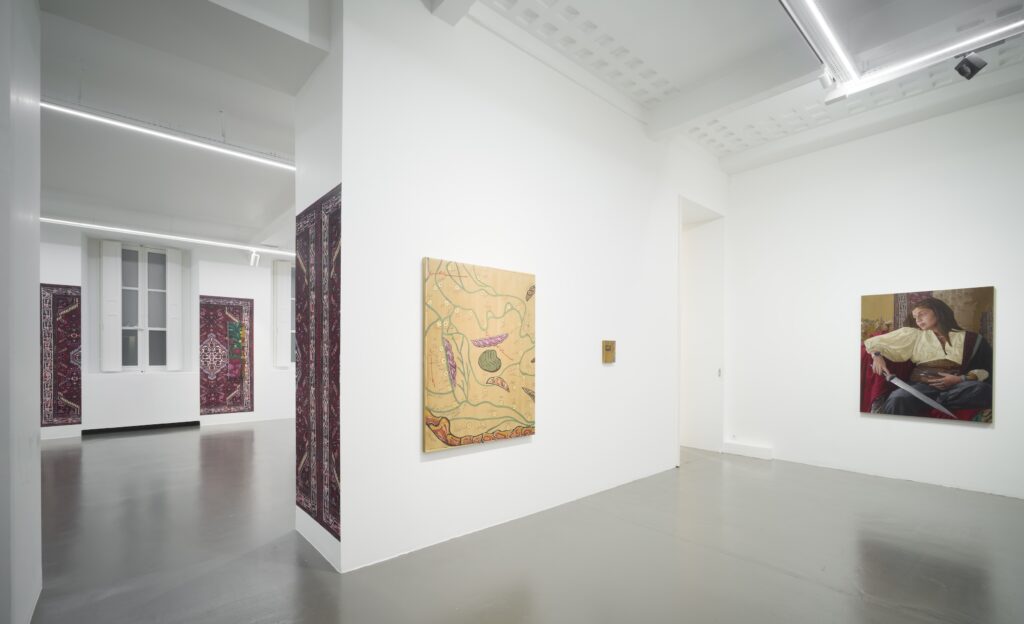
For his first solo show at mor charpentier, Rayan Yasmineh stages the encounter of two worlds, establishing a dialogue between East and West where family history merges with myth. His paintings, which blend ancient iconography with elements of everyday reality, illustrate a plural identity, Arab and European, nourished by cultural exchange and shared heritage. Together, the works mark out an itinerary, from the Near East to France, that questions the notion of borders and invites us to rethink the very idea of identity.
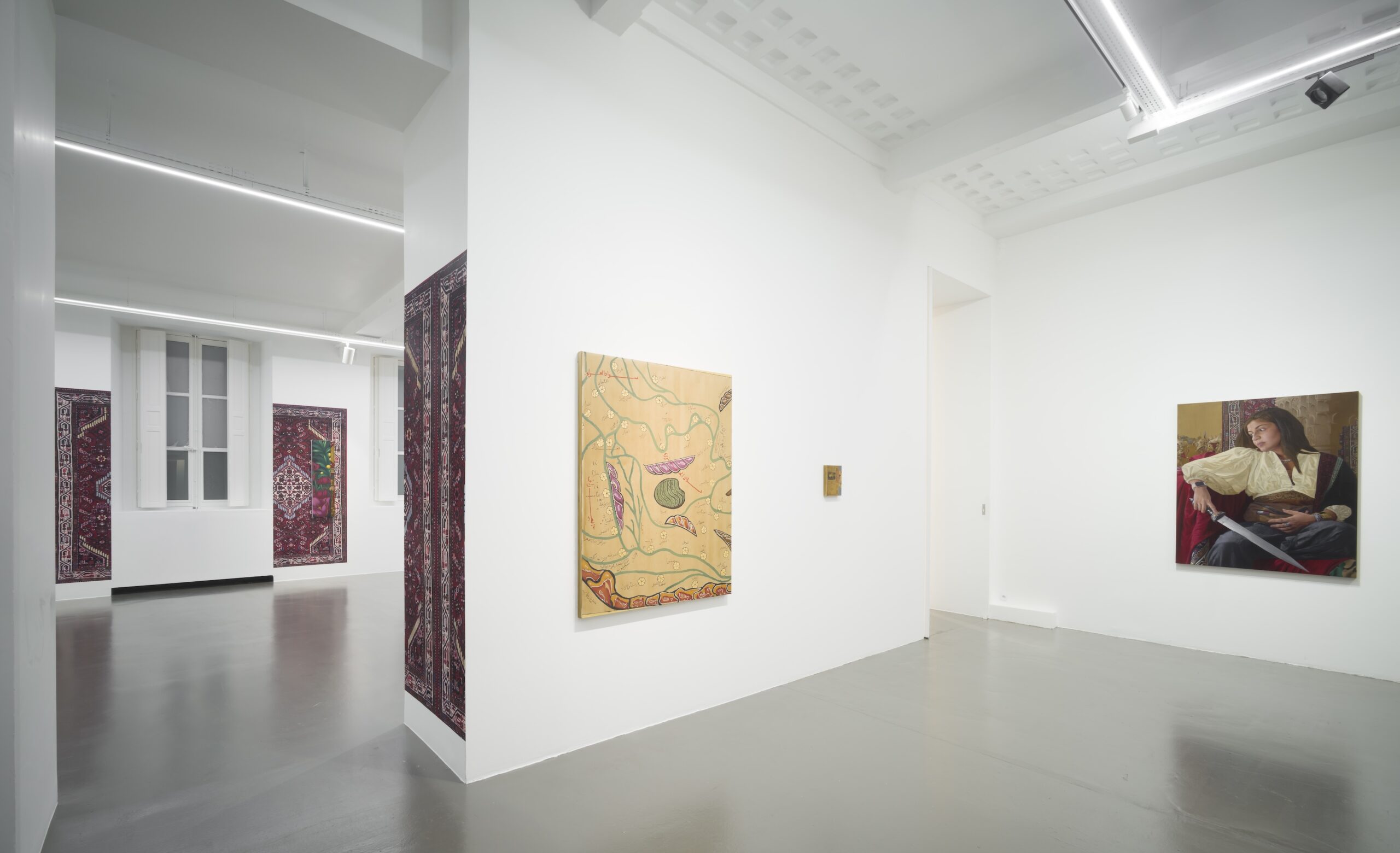
The exhibition opens with a confrontation between two geographical representations, which immediately raises the question of point of view. The first is an enlargement of a 12th- century map of France by the Arab geographer Al-Idrissi; the second is a reproduction of the Near East as seen by the 16th- century French cartographer Joseph Bongars. Accompanied by family archives dating from the British Mandate in Palestine — a photo, a passport cover, a paternal great- aunt’s school report — these two maps testify to a multiplicity of perceptions, and call into question the colonial logic. Judith’s portrait in front of the siege of Bethulia also underlines the duality to which the artist refers. By combining iconographic references borrowed from 16th-century Italian art, with other objects linked to her personal experience — such as the traditional embroidery worn on the heroine’s shoulder — Rayan Yasmineh reinterprets this classic of European religious painting through the prism of his intimate relationship with Palestine.
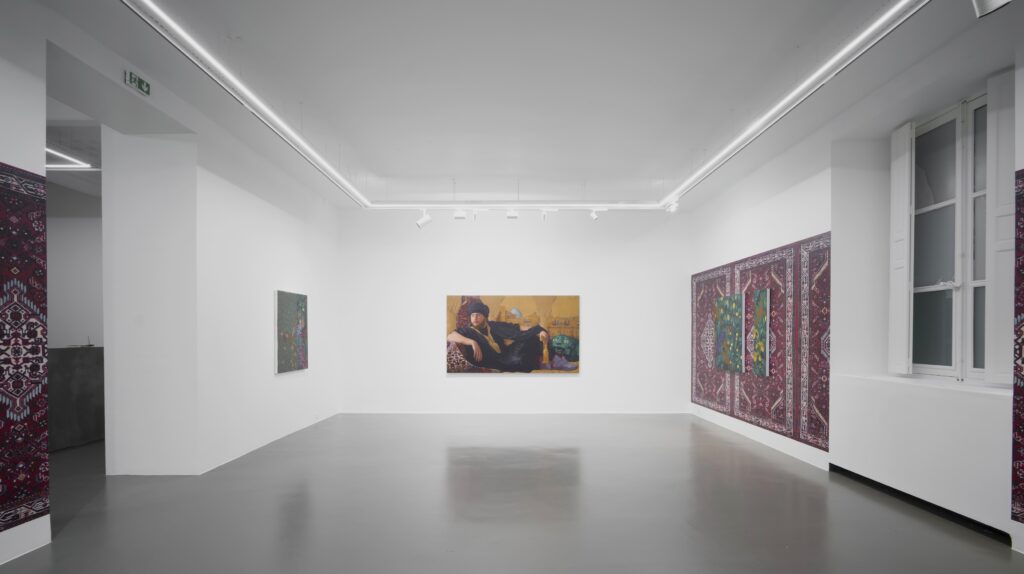
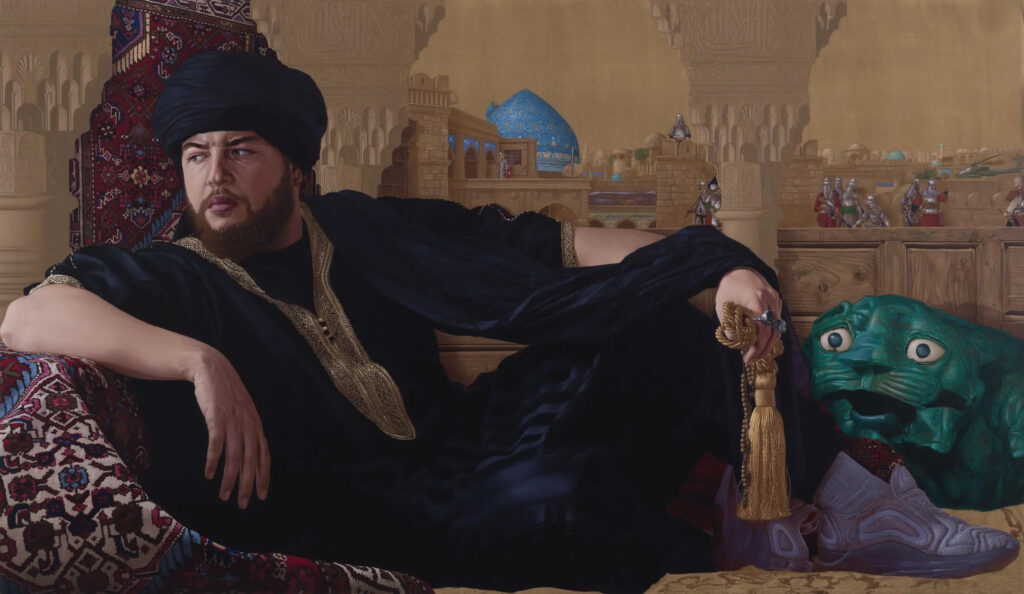
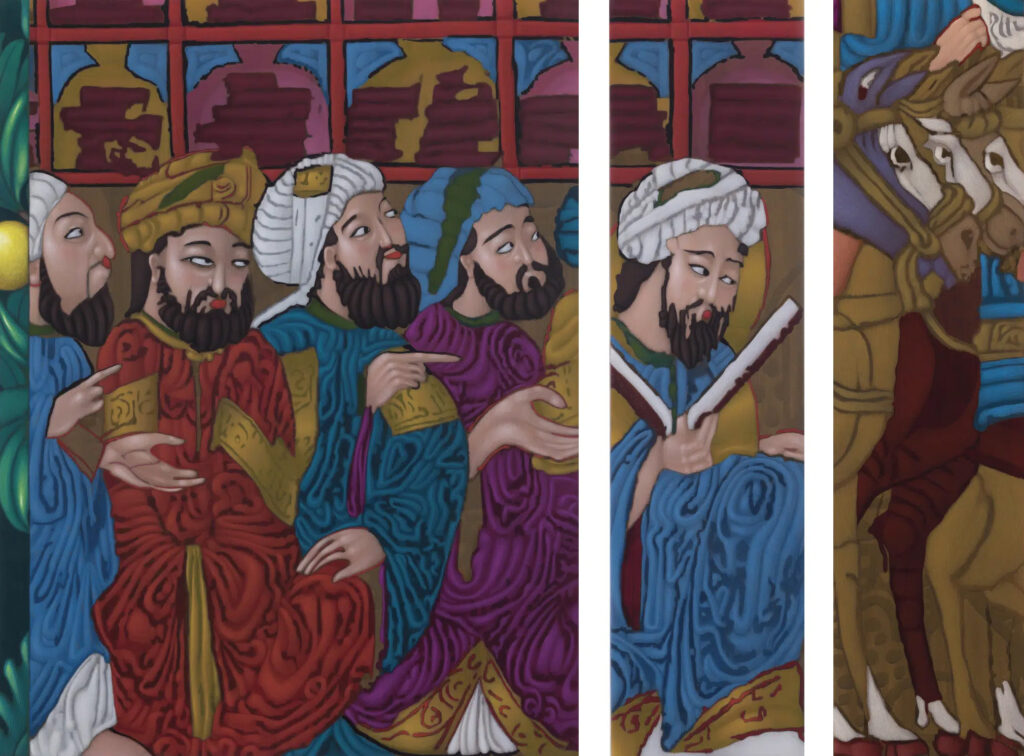
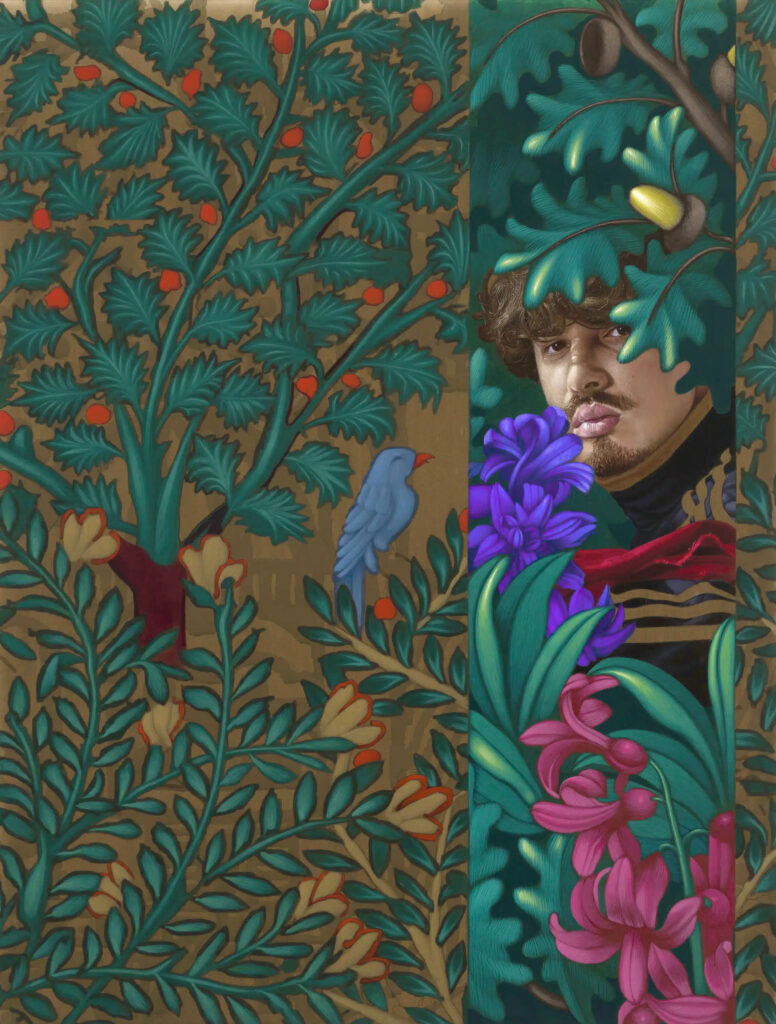
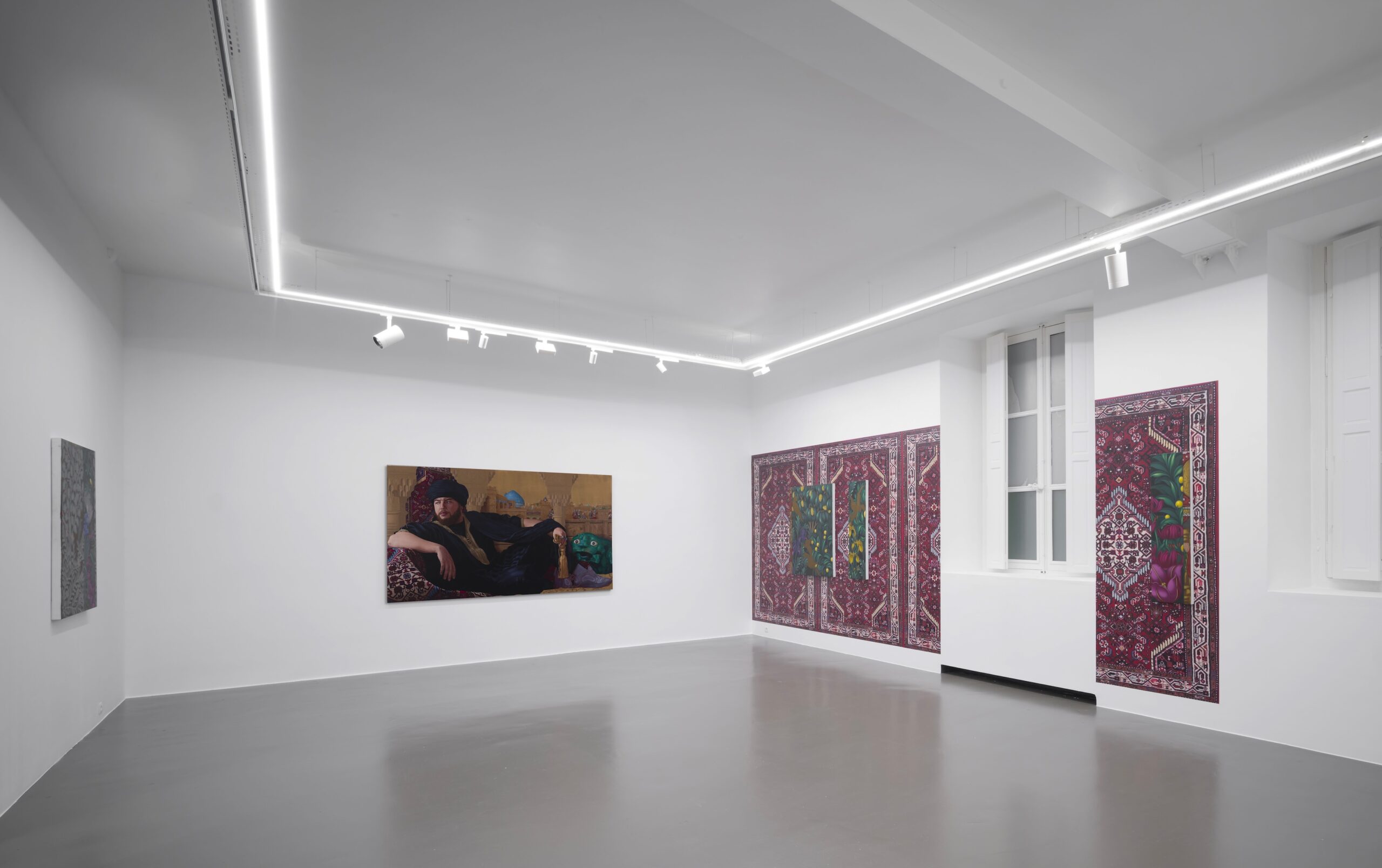
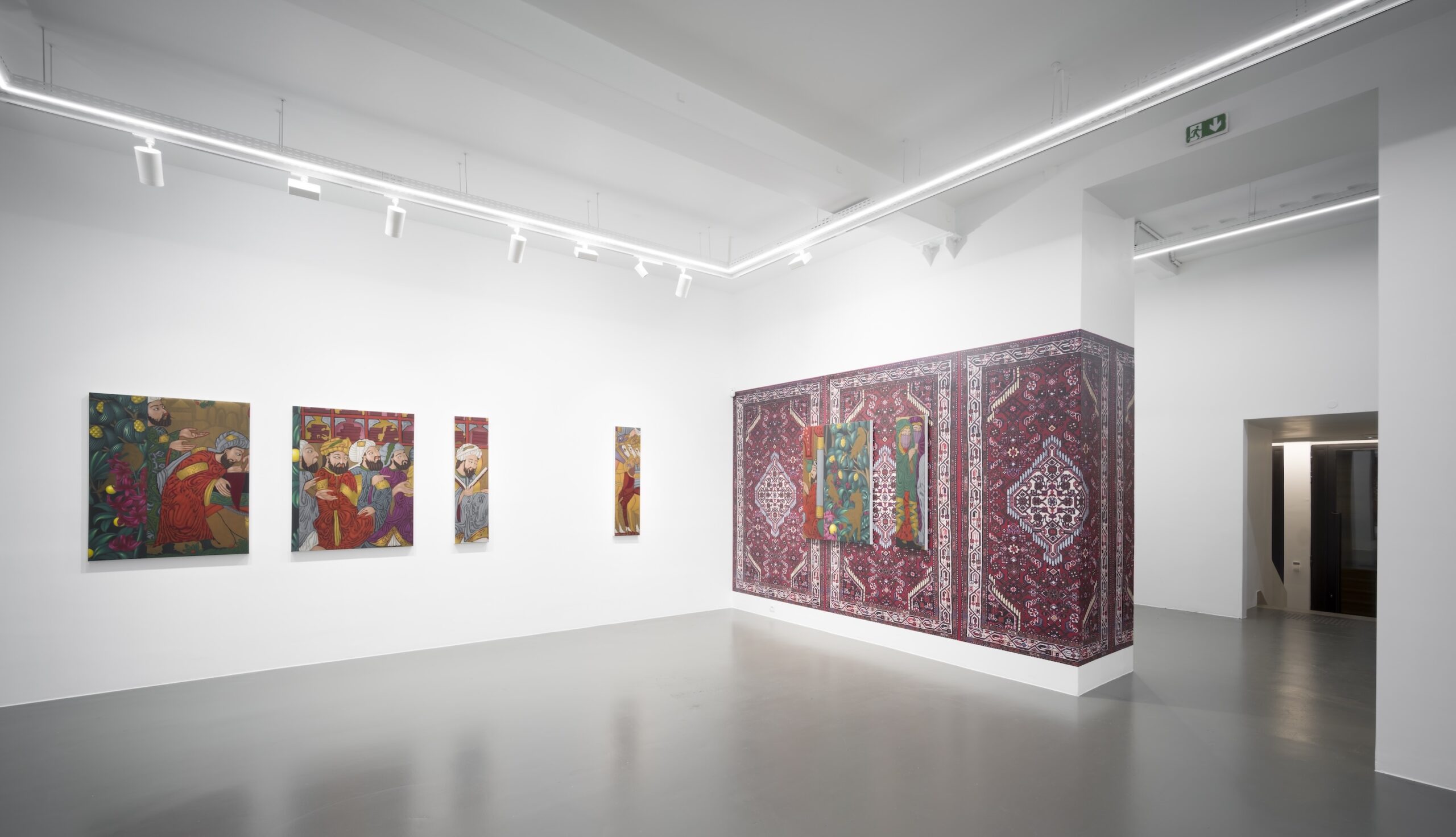
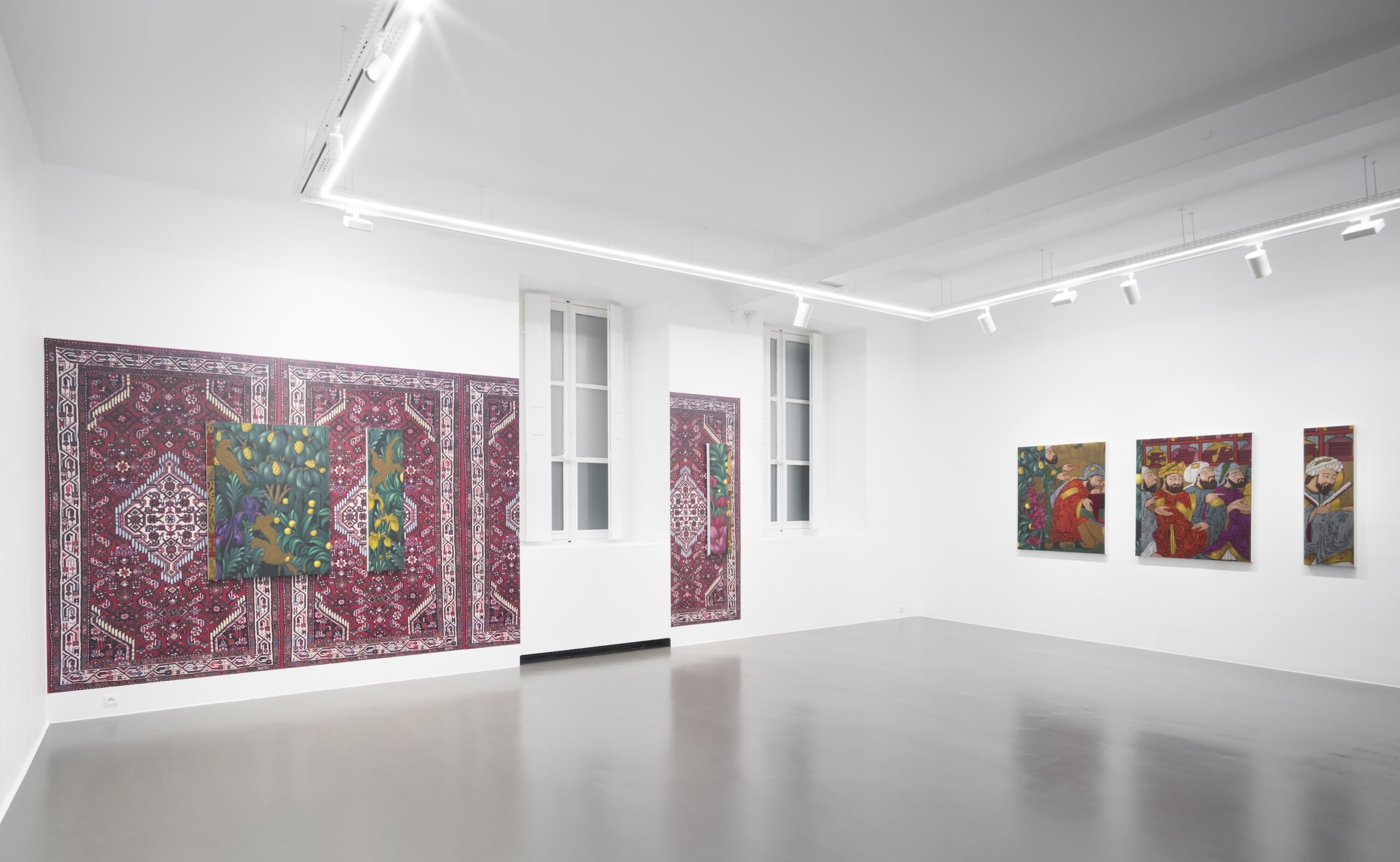
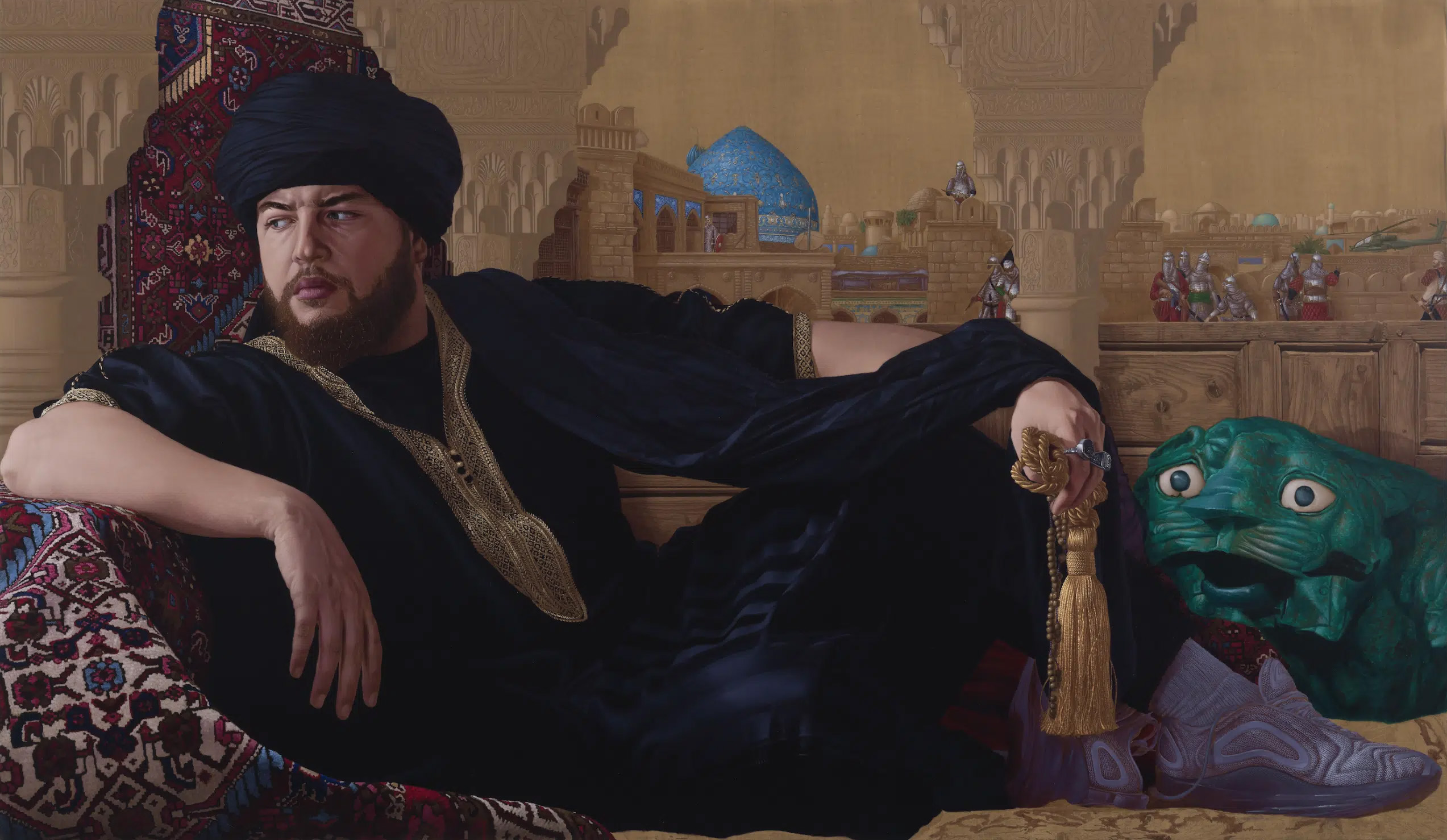
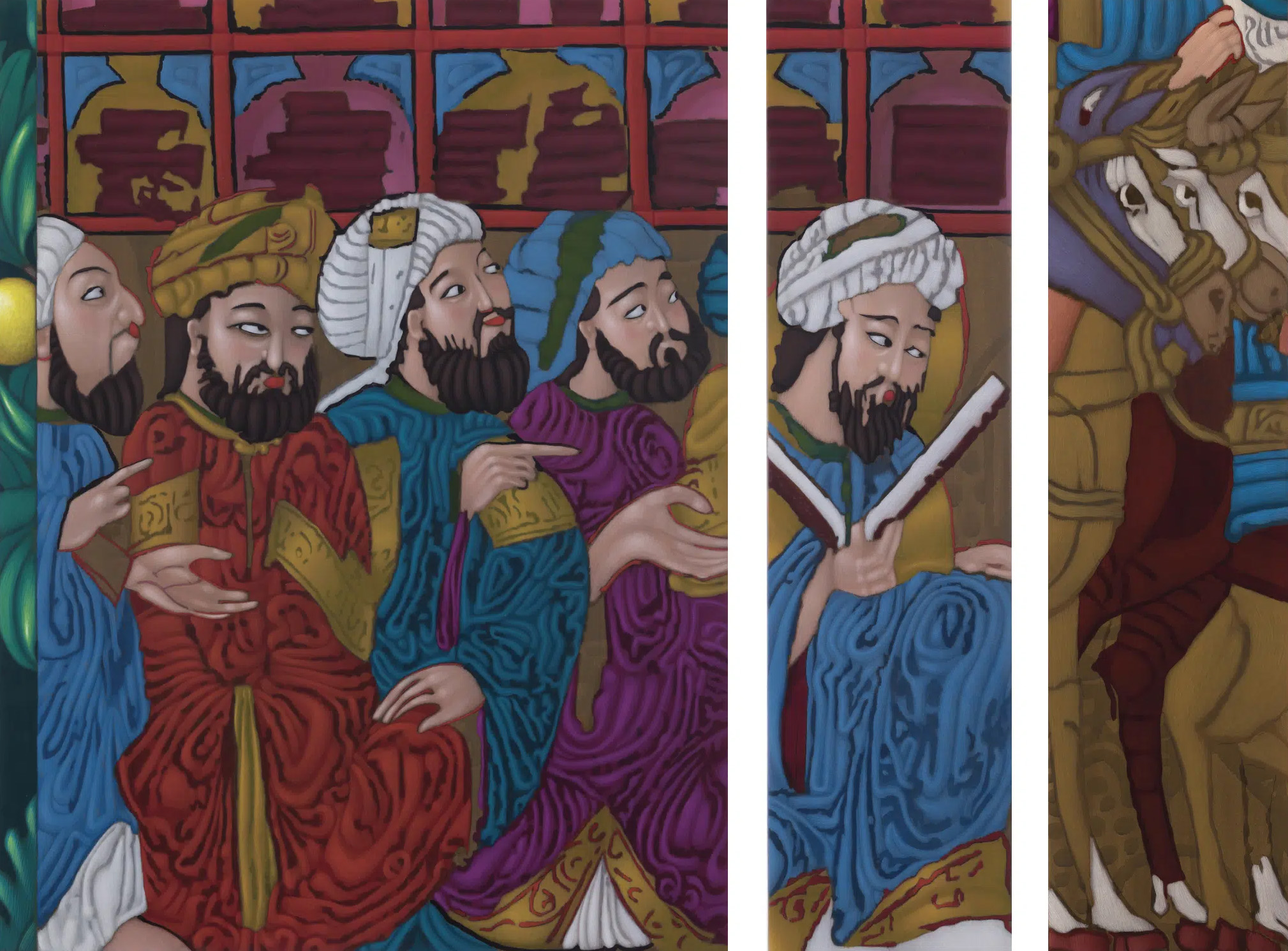
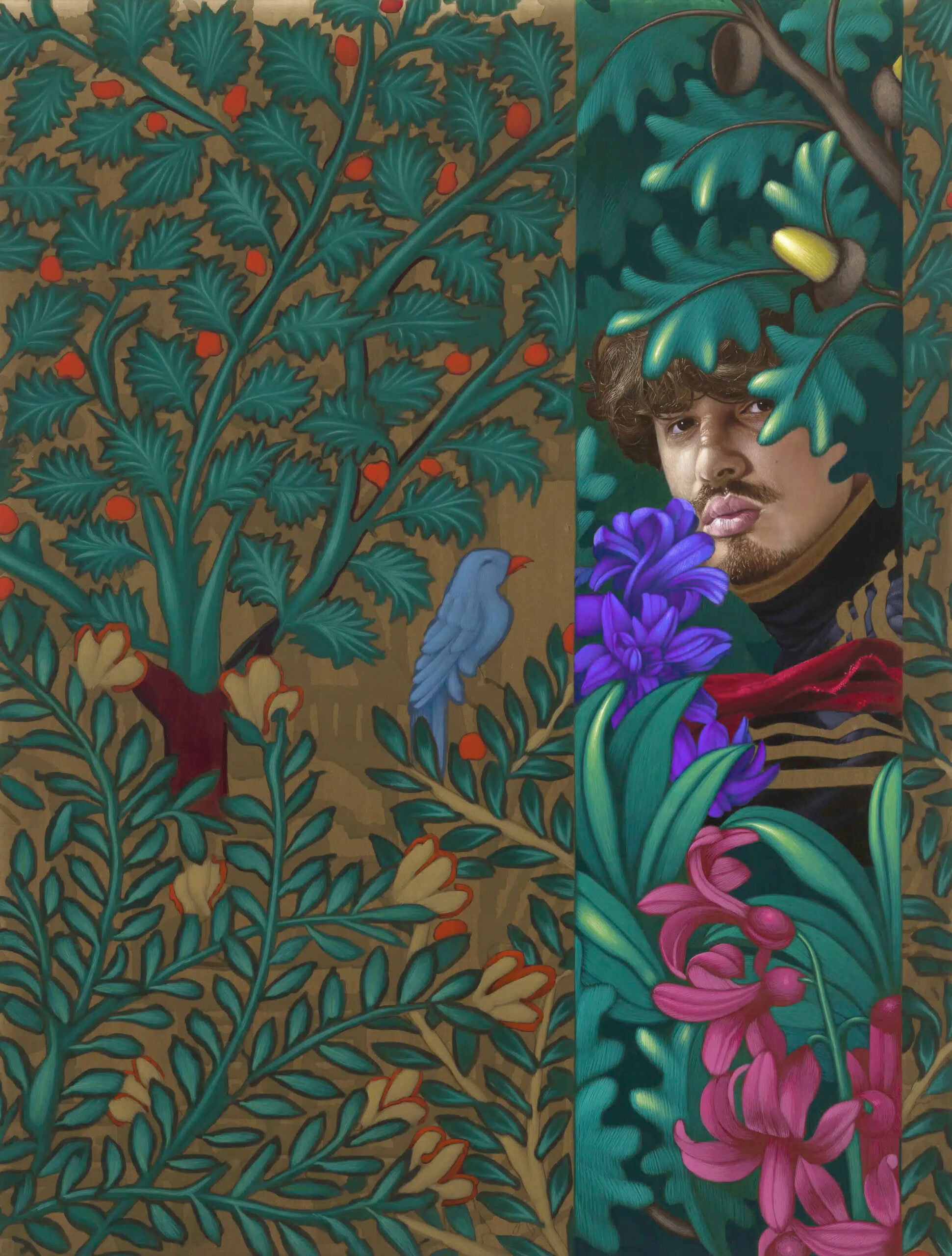
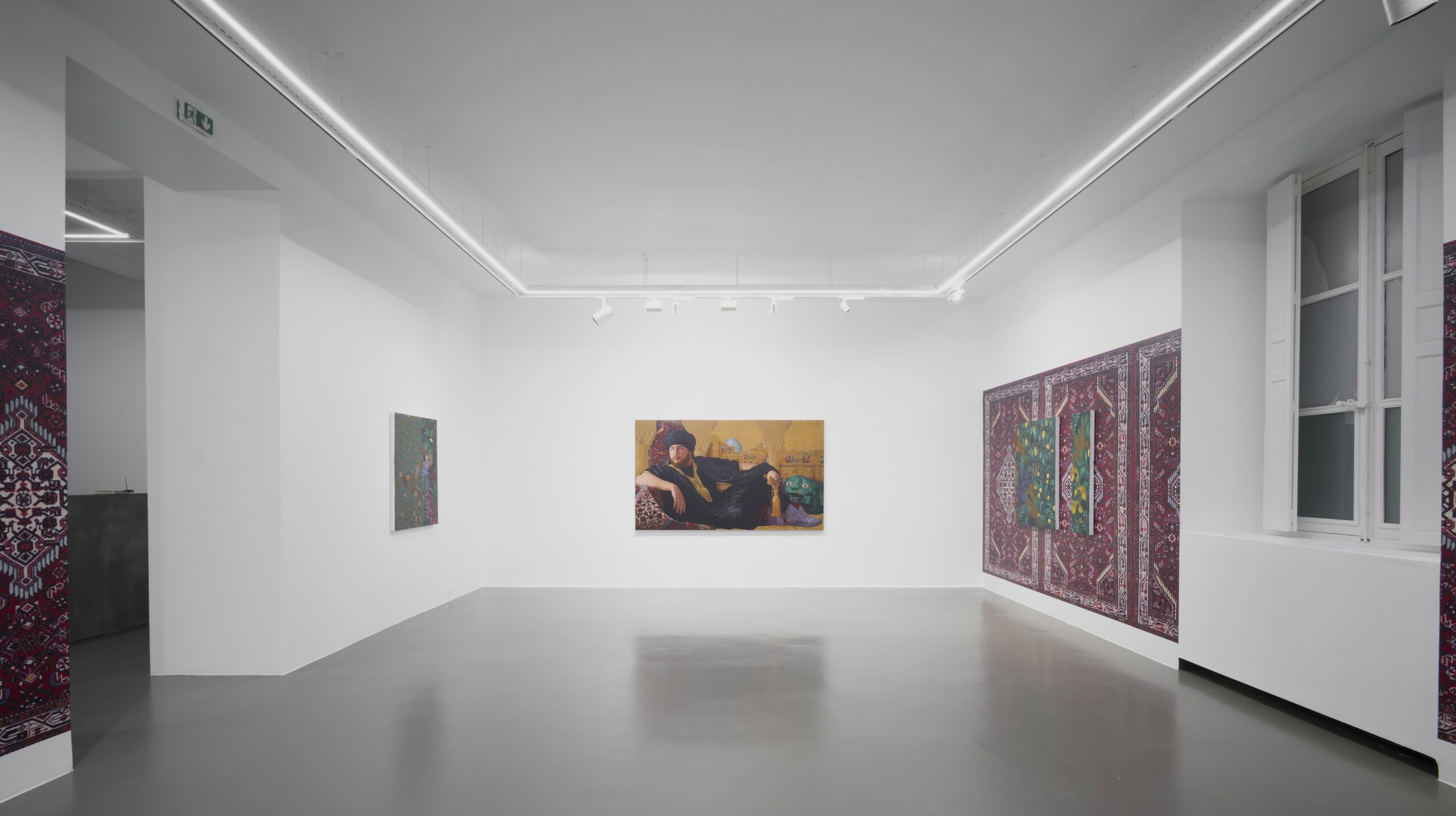
The Persian carpet in the background spreads across the walls of the second exhibition room, serving as a visual thread. What starts out as an ornament becomes a matrix, Rayan Yasmineh, 1258, 2025 (detail) the initial support on which certain paintings are based. Here again, several repertoires coexist and overlap: the mattness of medieval mille fleurs contrasts with the brilliance of figures borrowed from the miniatures of Al-Wasiti, a 13th-century Iraqi artist. These enlarged characters, reinterpreted with a gesture and technique typical of Western painting, evoke life in Baghdad before the city’s destruction by the Mongols in 1258. The last large canvas in the exhibition, featuring the imposing figure of a caliph, completes this blend of genres, from Persian miniatures and Flemish paintings to archival images and video game references. Titled 1258, it draws a parallel between the sack of Baghdad by the Mongols and the American invasion of 2003. This analogy invites reflection on the representation of the Middle East in the new Western cultural media, and shows how this collective imagination continues to be shaped by the informational treatment of recent conflicts.
READ MORE
The last large canvas in the exhibition, featuring the imposing figure of a caliph, completes this blend of genres, from Persian miniatures and Flemish paintings to archival images and video game references. Titled 1258, it draws a parallel between the sack of Baghdad by the Mongols and the American invasion of 2003. This analogy invites reflection on the representation of the Middle East in the new Western cultural media, and shows how this collective imagination continues to be shaped by the informational treatment of recent conflicts. By highlighting oriental objects from French collections — the Al-Idrissi map, the Al-Wasiti miniatures, the bronze lion at the Caliph’s feet — and drawing on his own family mythology, Rayan Yasmineh underlines the intimate and complex links that unite France and the Arab world, from colonization to the more recent refusal to take part in military operations in Iraq. His works bear witness to a history that is as violent and turbulent as it is friendly and complicit.